
Call-out fee: $80–$180
What most Sydney plumbers charge to attend. Ask for it on the phone. Anyone who will not name it is telling you something.
A burst pipe at 2am does not wait for business hours, and neither do we. One call reaches a licensed plumber rather than an answering service, and a crew is dispatched to Hornsby with the gear to stop the problem rather than look at it.
After-hours work is not the same trade as daytime work. The parts have to be on the van because no supplier is open, the diagnosis has to be right first time because there is no second attendance that night, and the person answering the phone has to be able to tell a genuine emergency from something that is cheaper on Monday.
That last part matters more than it sounds. Telling you a job can safely wait costs us the callout and saves you a premium, and it is the fastest way to know whether the outfit you have rung is worth using again.


Established Upper North Shore homes still run original clay drains that crack with age and ground movement, admitting roots and soil.
Reactive clay soil shrinks through a dry spell and swells when the rain finally comes, and rigid drainage laid through it gets moved both ways. The joint that has been working loose all summer is the one that gives when the ground lifts.
It is the reason emergency drainage calls in these suburbs arrive in clusters rather than evenly, and why the week after a long dry breaks is consistently the busiest.
A drain on a slope moves water fast, and fast is not always good. Waste can outrun the liquid carrying it on a steep run and settle at the first flat section, building up at exactly the same spot each time.
Steep, rocky terrain makes stormwater drainage tricky, and blocked pits overflow quickly in the area’s heavy downpours.
The tell is a blockage that recurs at the same interval in the same place. That is a gradient problem, not a usage problem, and no amount of careful flushing fixes it — the answer is to see the profile of the line and correct the section that is wrong.
An after-hours visit is about making it safe and usable: clear the blockage, get the fixtures working, and stop anything overflowing. That is nearly always achievable.
What does not happen at midnight is a structural repair. If the camera shows a cracked or root-filled run, you will hear that on the night with the options, and the actual fix is booked in daylight when it can be done properly.
If this is the second or third time, the useful thing you can do at 2am is write down the date. Two or three of them tell a plumber more than any description, because the interval reveals how fast the obstruction rebuilds.
A shortening gap between call-outs is the signal that jetting has stopped being the answer. That is a daylight conversation, not a tonight one, but tonight is when the evidence gets recorded.
Seasonal movement produces the most frustrating category of problem: something that backs up in one season, behaves perfectly in another, and is easy to write off as bad luck.
If you have called someone out twice in two years at roughly the same time of year, that is a pattern and it is worth saying on the phone. It changes what we look for.
On sloping ground the problem is rarely where the symptom is. Water leaves a failure at the highest point and surfaces at the lowest, which can be several properties away and well downhill of anything you would think to look at.
It is also why a neighbour's overflowing gully is sometimes your blocked line, and occasionally the reverse. We work uphill from the symptom rather than digging where the water appears.
Hornsby’s bushland setting and towering gums send roots deep into ageing clay sewers, the single biggest cause of blockages on local blocks.
Clay drainage is laid in short lengths, so a single run has a great many joints, and after decades each one has opened a fraction. The line copes fine at normal flow and stops coping the moment demand spikes, which is why so many of these calls come on a weekend morning or after a full house has been showering.
Clearing restores flow the same night. Whether it holds depends on what the camera finds, and that is worth doing before the next long weekend rather than after it.
What most Sydney plumbers charge to attend. Ask for it on the phone. Anyone who will not name it is telling you something.
Against roughly $120–$160 in business hours. Nights, weekends and public holidays sit at the top of the range.
Call-out, the first stretch of labour and minor parts, for the common jobs: an isolated burst, a blocked toilet, a failed valve.
Slab leaks, gas line faults and anything needing walls opened at 2am climb quickly. You hear the number before we start, not after.
If it can genuinely hold, isolated, contained, water off, we will say so on the phone and book you at daylight rates instead.
The price is agreed before work starts, including at 2am. Figures here are indicative of the 2026 Sydney market rather than a quote from us, you get your own number as a fixed price before any work starts.
Not a call centre. You describe what is happening, we tell you what to shut off right now, and whether this genuinely needs someone tonight. Sometimes it does not, and we say so.
The nearest available crew heads for Hornsby with the common failure points already stocked on the van: pipe, fittings, valves, drain gear.
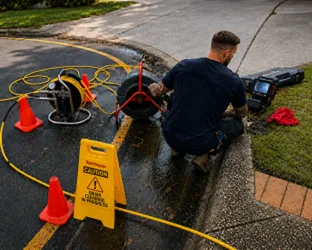
First job on site is stopping the damage: isolate, contain, make safe. Then you get a fixed price for the proper repair before it starts.

Most emergencies are permanently repaired on the spot. If a part has to wait for a supplier, you are left safe, watertight and functioning in the meantime.
Describe what it is doing and we will tell you honestly whether it needs a van now or costs less on Monday.
Straight answers on rates, timing and when it can safely wait.

Ring us and a plumber picks up. Leave details instead and you will get a callback with an ETA, not a sales call.

Leave your details and our local Hornsby team will call you back fast.